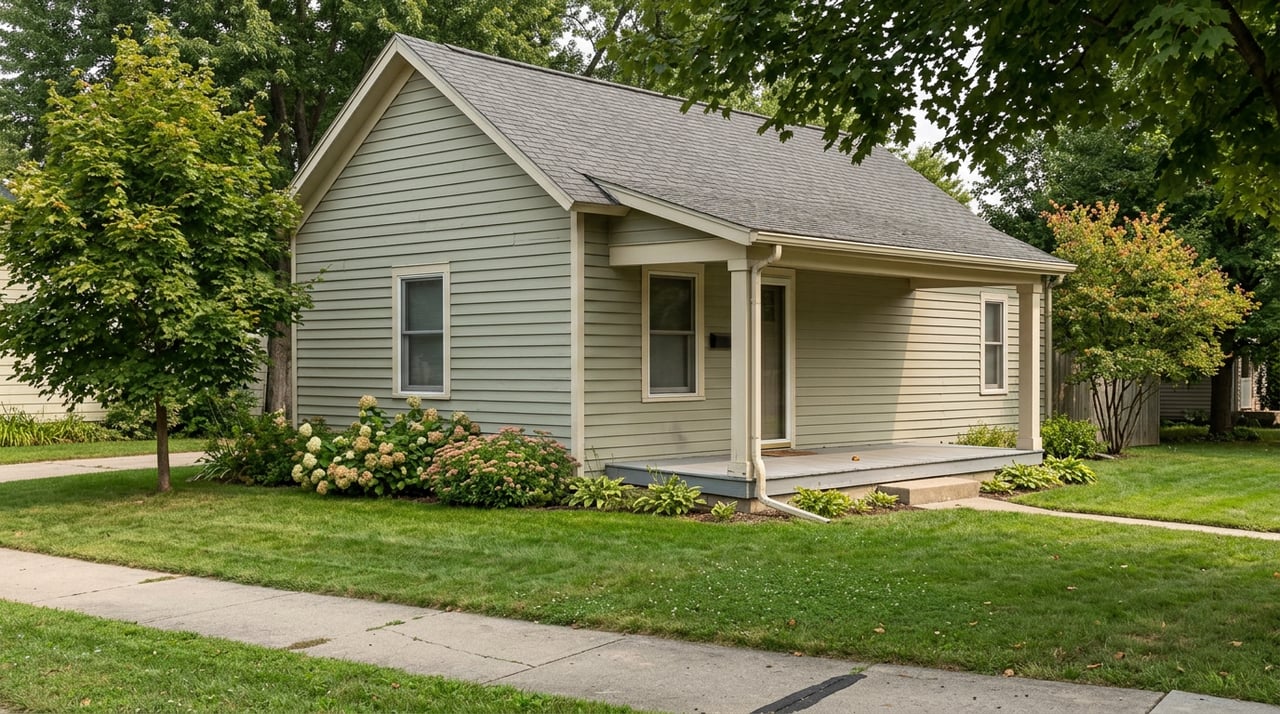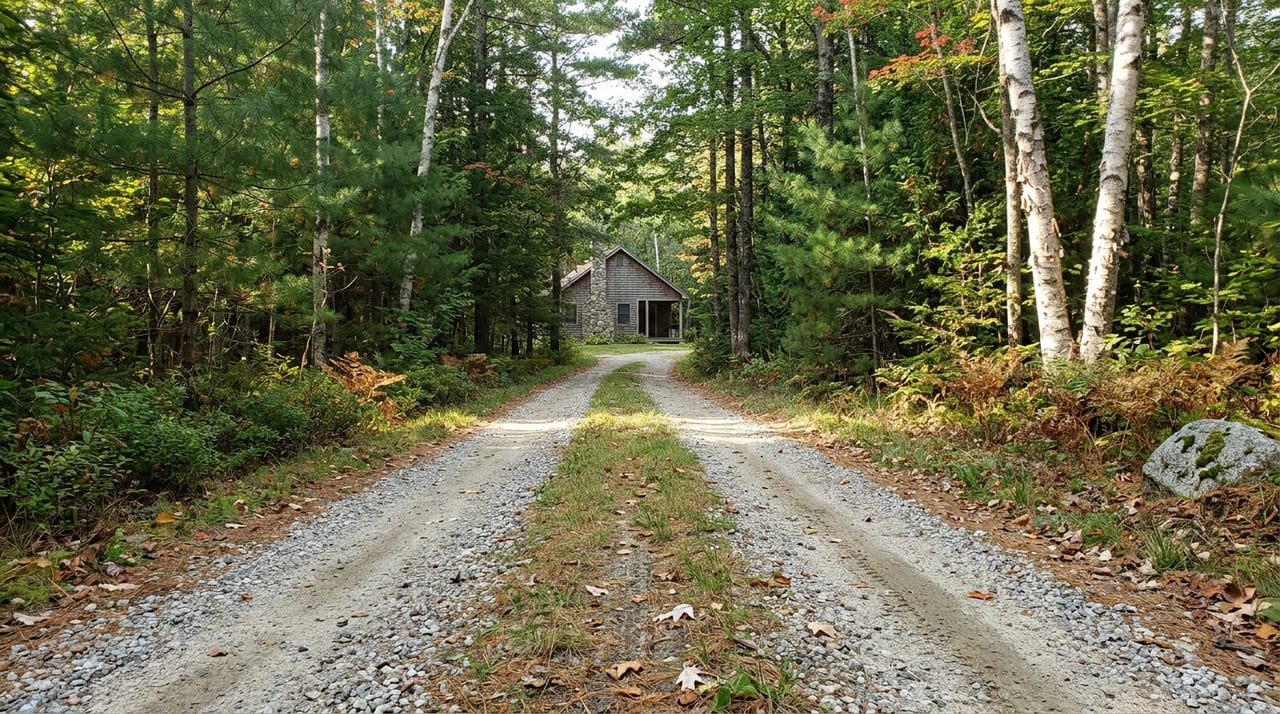
Every winter, the Montmorency County Road Commission has the same conversation with someone new. A property owner calls in, or stops by the office, expecting a plow. The road commission's own explanation of its road types notes that people have shown up believing the county would maintain their road, only to learn after the first snowfall that it was never a county road at all. The person isn't wrong to be confused. The road looks like every other gravel lane in the county. It just was never certified as one.
That gap between what a road looks like and what it legally is turns out to be the more interesting story about buying rural property here, not because it's rare, but because nothing in the buying process automatically catches it. The same is true of a second, unrelated system: whether the well and septic on a property get checked before the sale closes. In most of northern Michigan, that depends entirely on which county you're standing in, and Montmorency County's answer is different from some of its neighbors.
Neither of these things is a defect in the market. They're both artifacts of how rural Michigan built its infrastructure and its health code, one county at a time, decades apart. But if you're buying land, a cottage, or a year-round home here, the practical lesson is the same: the paperwork trail that would normally flag a problem is thinner than buyers expect, and the burden of checking falls on you.
Why some roads were never county roads to begin with
Michigan counties didn't get their road systems all at once. Under the Township Road Relief Act of 1931, better known as the McNitt Act, counties were required to set up road commissions and absorb roughly 20 percent of township roads into a certified county system between 1932 and 1936. Whatever wasn't certified in that window stayed private, or became a platted road that was dedicated on paper but never actually built out. According to the Montmorency County Road Commission, some of those platted roads are still wooded over today, technically dedicated to public use decades ago but never opened.
That history matters because it means "private road" in Montmorency County isn't a designation that gets applied to a handful of driveways. It's the default status for any road whose right-of-way wasn't formally certified, and the county has been explicit that it currently has no seasonal roads in its system, only certified roads, private roads, and platted roads that were never developed.
Even when a road does get upgraded to county standards, the cost isn't the county's alone. The road commission's own figures show that turning a rough trail road into a paved, county-maintained road requires outside funding, and at present Montmorency County requires the township to cover 60 percent of construction costs. Some counties have pushed that share as high as 100 percent. Either way, the arithmetic tells you something useful: getting a road certified is expensive and slow, which is exactly why so many roads serving rural parcels here simply never went through the process.
What that means when you're the one making an offer
None of this shows up on a listing sheet. A private road can be perfectly well maintained by the people who use it, and a certified county road can still be gravel. Status and quality aren't the same thing. What status does determine is who is legally responsible for keeping the road usable, and whether that responsibility is written down anywhere.
Before writing an offer on a property with any road other than a clearly marked primary county route, it's worth asking a few direct questions:
- Is this road a certified county road, a private road, or a platted road that was never built?
- If it's private, is there a recorded road maintenance agreement, and does it specify who pays for grading, plowing, and repairs?
- If there's no recorded agreement, has maintenance historically been handled informally among the neighbors, and is that arrangement something you're comfortable inheriting?
- Does your lender treat unrecorded private road access as a condition of financing?
That last question matters more than it sounds. A recorded easement and maintenance agreement can affect whether a lender is comfortable with the property at all, since access that isn't legally guaranteed in writing is a harder thing to underwrite than access that is. This is a conversation worth having with your lender early, not a detail to discover during underwriting.
The second gap: nobody has to check the septic here either
Michigan is unusual nationally in that it has no statewide sanitary code. Septic and well rules are written and enforced county by county, or in Montmorency County's case, by a four-county health district. District Health Department No. 4 covers Alpena, Cheboygan, Montmorency, and Presque Isle counties, with a Montmorency office located at 12480 State Street in Atlanta.
Some Michigan counties with heavy lakefront inventory have adopted what's called a time-of-sale or point-of-sale septic ordinance, requiring an inspection before a property with a well or septic system can legally change hands. Kalkaska and Manistee counties are two examples with that requirement in place. Others, including counties with sanitary codes like DHD4's, have not adopted one.
That distinction became public in a useful way in the spring of 2024, when state lawmakers were weighing legislation that would have required septic inspections every five years statewide. DHD4's environmental health director, Kevin Prevost, told the Alpena News at the time that a universal inspection mandate would be difficult for the district to enforce simply because it doesn't have a complete count of every septic system in its four counties, only estimates. He also noted that in the five years leading up to that 2024 report, the district's known failure rate had never exceeded 3 percent, well under the roughly 10 percent statewide failure estimate cited from state environmental data. As of that report, the bill had not moved past committee.
The practical upshot for a buyer here is straightforward. Because there's no local ordinance forcing the issue, a septic and well inspection on a Montmorency County property is something you request, not something the sale automatically includes. If your loan is FHA or VA financed, the lender will typically require proof the system functions and meets minimum separation distances from the well regardless of county rules, so a conventional buyer skipping the inspection is often the only one in the transaction who isn't checking.
If you do want an inspection, DHD4 maintains a list of registered septic contractors across its four counties, including firms based right in Hillman, such as Ableidinger Excavating and Kenyon Brothers. Using a locally registered contractor means the inspection findings are already in a format the health department and most lenders recognize.
| County | Time-of-Sale Septic Inspection Required? |
|---|---|
| Montmorency (DHD4) | No mandatory ordinance |
| Kalkaska | Yes, required at point of sale |
| Manistee | Yes, required at point of sale |
Why this is worth flagging before you write an offer, not after
Both of these gaps, the road and the septic, share the same shape. Each is a place where a buyer might reasonably assume some third party has already checked, and in Montmorency County, often no one has. That's not a knock on the county. It's a function of how rural Michigan road networks and sanitary codes were built, piece by piece, county by county, over the better part of a century.
It's also exactly the kind of thing an appraisal background is useful for catching early. Road access and septic condition both affect how a property appraises, not just how it looks on a walkthrough, and flagging them before an offer is written is a lot cheaper than renegotiating after an inspection contingency runs out.
A few questions worth asking before you sign anything
Does a private road affect my ability to finance the purchase? It can. Lenders vary in how they treat unrecorded access. Ask early rather than assuming it will be fine.
If Montmorency County doesn't require a septic inspection, is it still worth getting one? Yes, particularly if you're financing conventionally and won't have a lender requiring it for you. The cost of an inspection is small next to the cost of a failed drain field discovered after closing.
Who do I ask to find out if a specific road is certified? The Montmorency County Road Commission can confirm a road's status, and a title search will typically show whether a recorded easement or maintenance agreement exists.
If you're weighing a piece of land, a cottage, or a year-round home here and want someone who checks these things before you write an offer instead of after, Hillman Real Estate can walk the specifics of a parcel with you. Get in touch and we'll go through what's actually recorded, not just what's assumed.