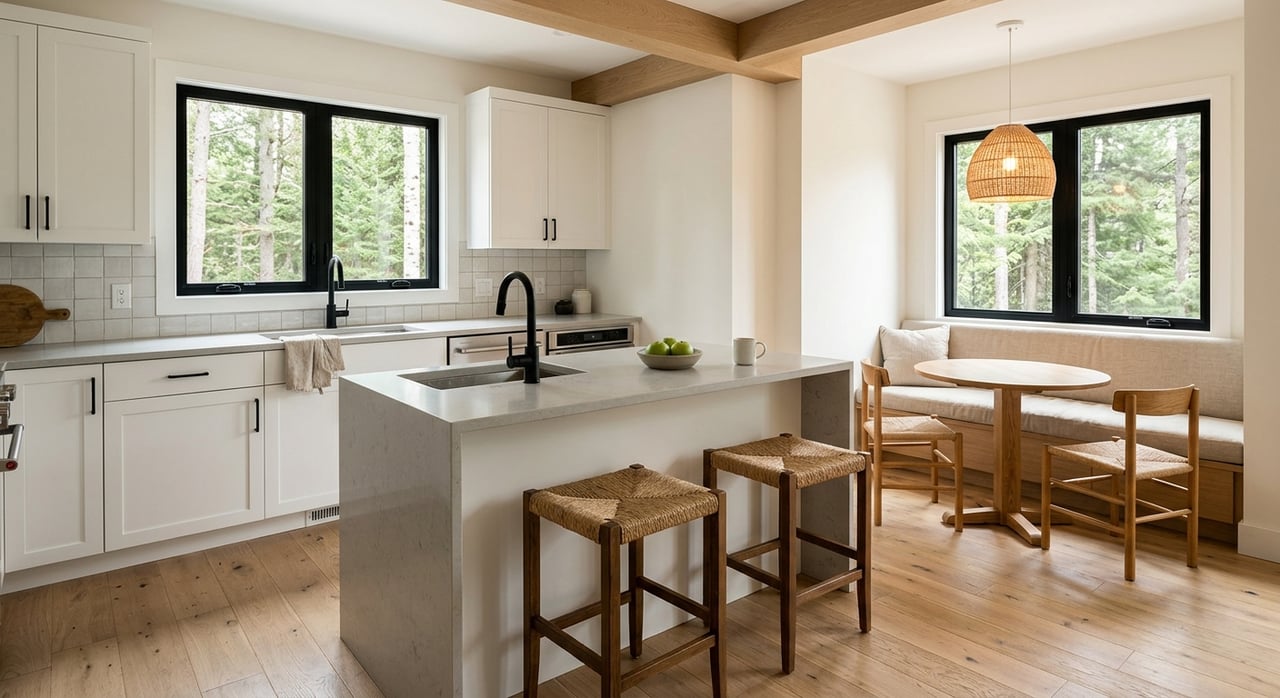
Wondering if a smaller home could make life easier without giving up the Montmorency County lifestyle you love? If you are tired of extra rooms, heavy upkeep, or land that takes more work than joy, downsizing can be a smart next step. In this guide, you will learn what downsizing looks like locally, how prices and timing can vary by town, and what to watch for before you make your move. Let’s dive in.
Why downsizing makes sense here
Downsizing is a natural fit in Montmorency County. The county’s 2025 population estimate was 9,842, and 34.1% of residents were age 65 or older. With 87.9% of housing units owner-occupied, many homeowners are thinking about how to simplify daily life while staying close to the lakes, woods, and communities they know.
This is also a place where housing looks different from many larger markets. A county hazard mitigation plan reported that 53.7% of housing units were seasonal, and much of the housing stock was built between 1960 and 1979, with 22.5% built before 1960. That means downsizing here often involves cottages, cabins, modest year-round homes, or smaller properties with less maintenance rather than just a standard suburban-style house.
What downsizing can look like locally
In Montmorency County, downsizing does not always mean giving up the lifestyle you enjoy. For some homeowners, it means moving from a larger year-round house into a smaller in-town home. For others, it means keeping lake access, privacy, or a bit of acreage while reducing square footage and upkeep.
That local flexibility matters because the county includes distinct markets. Atlanta is the county seat, Hillman is the only incorporated village, and Lewiston is known as a resort community. As a result, the right downsizing move for you may depend on whether you want convenience in town, a seasonal feel, or a lower-maintenance property near recreation.
Compare Atlanta, Hillman, and Lewiston
Town-level price differences can shape your options. Zillow reported these typical home values as of spring 2026:
- Atlanta: $167,534 typical home value, with Redfin showing a recent median sale price of $140K
- Hillman: $194,635 typical home value, with Redfin showing a recent median sale price of $120K
- Lewiston: $189,751 typical home value, with Redfin showing a recent median sale price of $193K
Those numbers are best viewed as complementary snapshots, not exact matches, because Zillow tracks typical value while Redfin tracks recent closed sales. Still, they show an important point: downsizing opportunities are not identical across the county.
Atlanta options
Atlanta may appeal to you if you want a smaller home at a more modest price point. Current examples in the research included a 2-bedroom, 1-bath home with 1,298 square feet listed at $132,900 and a 3-bedroom, 2-bath home with 1,136 square feet listed at $198,000. If your goal is practical living space without paying for more house than you need, Atlanta may be worth a close look.
Hillman options
Hillman offers a mix of year-round homes and cabin-style properties. Research examples included a 3-bedroom, 1-bath home with 1,488 square feet listed at $139,900 and a furnished 2-bedroom, 1-bath a-frame cabin with 953 square feet listed at $193,000. If you want local services, a community-centered setting, and a range of modest homes, Hillman can offer useful downsizing choices.
Lewiston options
Lewiston stands out if you are looking for a resort-style or low-maintenance feel. Research examples included a 2-bedroom, 1-bath home with 1,238 square feet listed at $125,000 and a 2-bedroom, 2-bath home with 531 square feet listed at $79,900, along with higher-end lake and resort properties that can rise well above $500K. This gives you a broad range, but it also means you need to compare locations and property types carefully.
Think beyond square footage
A smaller home is not automatically a simpler home. In Montmorency County, many buyers care just as much about land, access, and maintenance needs as they do about interior size. You may be able to reduce square footage while still keeping the parts of your lifestyle that matter most.
County listings show just how varied the options can be. The market includes modest lots, large acreage parcels, and waterfront homes at much higher price points. That means you might trade a larger house for a smaller one and still keep privacy, garage space, or even lake access if that is your priority.
Features to prioritize in a smaller home
When you downsize in this part of Michigan, usability usually matters more than flashy upgrades. Older homes, seasonal properties, and rural settings can all bring unique maintenance questions. A smart move is to focus on how the property will work for you day to day.
Look closely at features like these:
- First-floor living
- Manageable yard size
- Garage and storage space
- Efficient heating and cooling
- Well and septic condition
- Driveway maintenance needs
- Winter access and snow removal
- Overall repair demands for older structures
If you are considering a condo or resort-style property, add a second list of questions. Ask about association dues, pet or rental rules, snow removal, and exactly which maintenance tasks are covered. In places like Lewiston, a property may offer lower day-to-day upkeep, but that does not always mean every exterior responsibility disappears.
Should you sell first or buy first?
This is one of the biggest downsizing questions, and local timing matters. Countywide, Redfin reported 87 days on market in March 2026, but the pace differed a lot by town: Lewiston was 52 days, Hillman was 104 days, and Atlanta was 182 days. In a market like this, you should not assume your current home will sell on the same timeline as your next home becomes available.
That is why a one-step swap is often harder than people expect. The county had 69 homes for sale, and Zillow reported a countywide median list price of $216,633 alongside a typical home value of $184,703 as of April 30, 2026. With modest inventory and uneven market speed, your best move may be to build a coordinated plan rather than rely on perfect timing.
A practical timing strategy
Before you list or make an offer, think through these questions:
- Do you need the proceeds from your current home to buy the next one?
- Would temporary housing make the move easier?
- If your home sells first, would a rent-back help bridge the gap?
- Are you trying to be settled before a specific season?
That last question matters more here than it might in other places. Because so much of the county’s housing is seasonal, some buyers care most about being ready for summer lake use, fall recreation, or winter access rather than matching two closing dates exactly.
How much equity do you need?
The right amount of equity depends on your goals, not just your current home’s value. If you want to move from a larger house into a modest in-town home, you may be able to lower your monthly costs and free up cash. If you want a smaller home with lake access, resort-style convenience, or acreage, your budget may need to stretch in a different way.
This is where appraisal-informed pricing can help. In a county with varied housing types, older homes, seasonal properties, and uneven town-level pricing, a realistic estimate of your current home’s market position is a key first step. It can help you compare what you could net from a sale against the real cost of the kind of smaller property you actually want.
Tax and closing details to plan for
If you are moving within Michigan, a few state-level items can affect your cash flow and timing. Michigan’s Principal Residence Exemption, or PRE, is separate from the Homestead Property Tax Credit. The PRE exempts an owner’s principal residence from the local school operating millage, up to 18 mills, and it is claimed by filing an affidavit with the local tax collecting unit.
The state also says that when you sell one home and buy another, property taxes for both homes must be prorated for the Homestead Property Tax Credit calculation. In addition, a buyer must file a Property Transfer Affidavit with the local assessor within 45 days of the transfer. A change in ownership generally causes taxable value to uncap in the following calendar year unless an exemption applies.
These details are easy to overlook when you are focused on packing and moving. But they matter because they can affect your first-year costs in the new home and the timeline for paperwork after closing.
Keep the lifestyle, reduce the work
The best downsizing moves in Montmorency County usually keep the parts of life you still want. You may not need the same amount of square footage, yard work, or upkeep you once did, but you may still want the woods, the water, the privacy, or the familiar town you call home. That is why downsizing here is often less about leaving a lifestyle behind and more about choosing a version of it that fits your next chapter better.
A careful plan can help you get there with fewer surprises. When you understand local pricing, timing, property types, and Michigan tax steps, you can make a move that feels lighter, simpler, and more manageable.
If you are thinking about downsizing in Montmorency County, Aimee Smith can help you compare local options, price your current property with confidence, and plan your next move with practical Up North guidance.
FAQs
What does downsizing in Montmorency County usually look like?
- It often means moving into a smaller year-round home, cottage, cabin, or lower-maintenance property while keeping the lifestyle features that matter to you, such as lake access, privacy, or manageable acreage.
What are typical home values in Montmorency County towns?
- As of spring 2026, Zillow reported typical home values of $167,534 in Atlanta, $194,635 in Hillman, and $189,751 in Lewiston, with countywide typical value at $184,703.
Is Lewiston a good place to find a lower-maintenance home?
- Lewiston has a strong resort-style niche and some smaller homes and limited condo inventory, but maintenance responsibilities can still vary by property type and association rules.
Should you sell your Montmorency County home before buying a smaller one?
- It depends on your finances and timing, but local market data suggest you should plan carefully because inventory is modest and days on market vary widely between Lewiston, Hillman, and Atlanta.
What property features matter most when downsizing in Montmorency County?
- Many buyers prioritize first-floor living, smaller yards, garage and storage space, efficient heating and cooling, and confidence in well, septic, driveway, and winter access.
What Michigan tax steps matter when moving to a smaller home?
- You may need to address the Principal Residence Exemption, property tax proration for the Homestead Property Tax Credit calculation, and the Property Transfer Affidavit that must be filed with the local assessor within 45 days of transfer.